

General context: The evolution of search engines and the emergence of LLMs
Until relatively recently, search engines functioned primarily as giant indexes. When you asked a question, the engine would show you a list of links to web pages that potentially contained the answer.
Your task as a user was to click, navigate, and find the information. Websites like our clients' became essential by creating detailed and authoritative content that answered those informational questions, attracting organic traffic.
But this model seems to be becoming obsolete with each passing day, and this has a direct impact on the future of SEO as we knew it. We've seen many changes, but this one is different and significant.
Side Effects of the Evolution of Search Results
The arrival and increasing sophistication of Large Language Models (LLMs)—like those that power AI assistants, chatbots, and new search features—have fundamentally altered this paradigm. LLMs don't just index; they understand, synthesize, and generate information.
This means you no longer need to click on a link to get an answer, because the answer can be generated and delivered instantly and directly.
This change is the epicenter of the loss of traffic in the informational layer, and one of the main arguments for the voices that "bury" the future of SEO every year.
Direct impact of LLMs: Direct responses and click reduction
The main factor contributing to the loss of traffic is the inability of LLMs to provide direct and concise answers to informational queries. Previously, if a user searched for, for example, "how to rank on Google" or "how to optimize my website," the search engine would present a list of articles. The user had to select one, load the page, and read the content until they found the desired information.
Now, an LLM can process that same query and return a direct summary of the effects of inadequate hosting or the most common optimization strategies in a matter of seconds, without the user having to leave the AI interface or the search engine.
This phenomenon is commonly known as "zero-click searches" or "instant answers." Users get what they need instantly, drastically reducing the need to click on traditional links.
For almost any website, this translates into fewer visits to informational pages that were previously key sources of traffic.
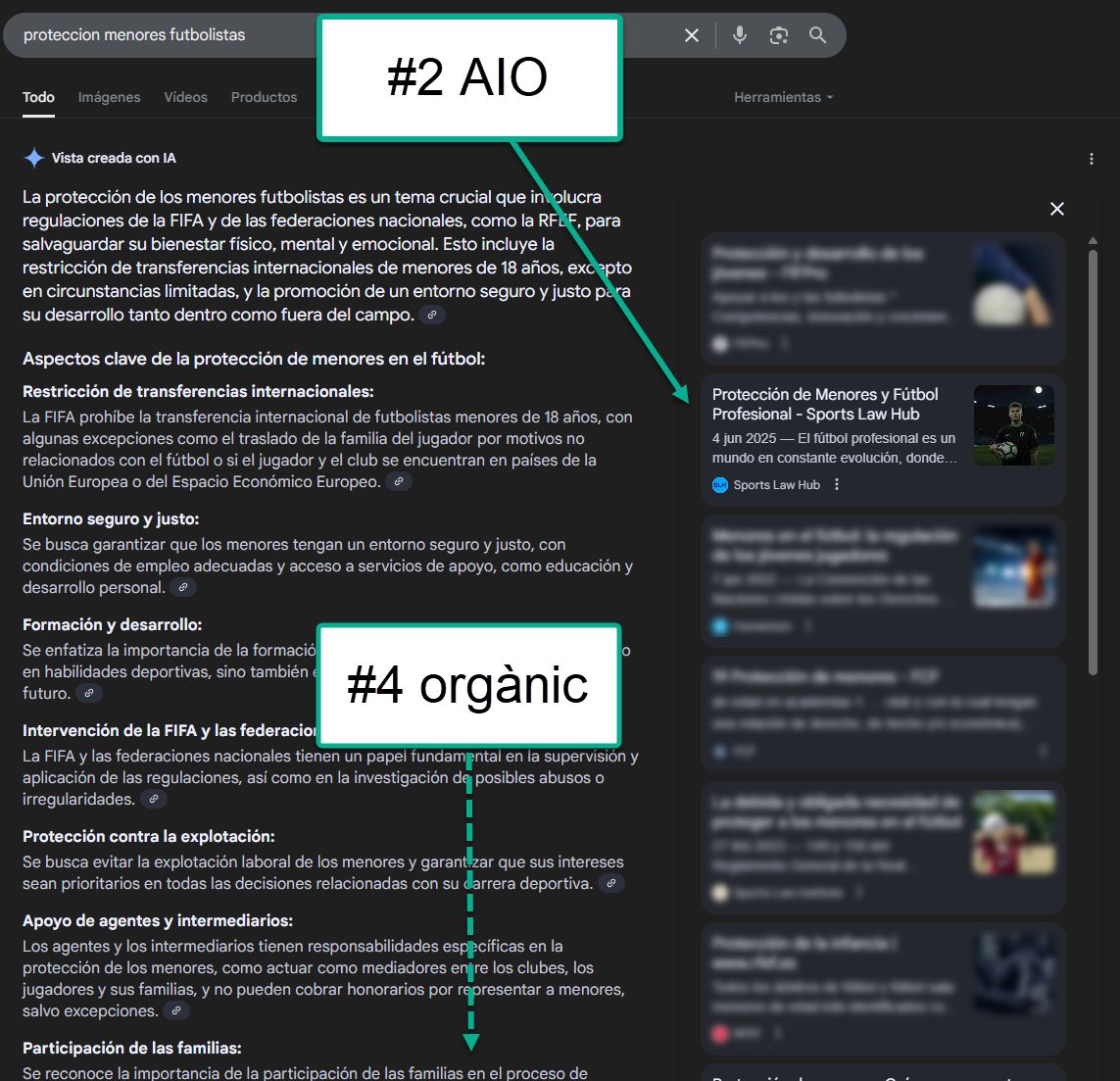
Changes in SERPs (search engine results pages): AI integration and cannibalization
Search engines themselves have not been left behind; they have integrated LLM technology directly into their search engine results pages (SERPs). The most visible manifestation of this is Google's "AI Overviews" or "Search Generative Experience (SGE)." These features generate a summary or answer to the user's query, displaying this highlighted information at the top of the results page, often before the traditional organic results.
This creates a cannibalization of organic traffic. Instead of directing the user to an external source, the search engine now satisfies the informational intent within its own ecosystem. Although AI Overviews typically cite their sources with links, the visibility of these links is lower, and the likelihood of a click decreases significantly if the user has already found the answer they were looking for.
Your content remains valuable, but its role shifts from being the destination to being the training ground for the search engine. The future of SEO lies in intelligent adaptation.
It's paradoxical, but the past of SEO—how many times have we heard "Content is King"?—now poses a threat to its future. Content is coming for us, shaped by generative models that have learned from it and are now returning it to us.
Change in user behavior: preference for immediacy and brevity
Constant exposure to instant information has reshaped user expectations. They now seek immediacy and conciseness. Patience for extensive research or navigating complex websites has diminished, especially for basic or straightforward queries.
This shift manifests in several ways:
- Convenience: It's easier to type a question into a chatbot or search bar that requires an AI-generated answer.
- Efficiency: Getting a curated and summarized response saves time and cognitive effort.
- Conversational: Interacting with an LLM often feels more natural and conversational, encouraging their use for information gathering.
For your company's website, this means that users who previously would have visited your blog to learn about an industrial process (for example) can now simply ask an LLM and get an answer without leaving your chat application or search engine.
Something that won't change in the future of SEO
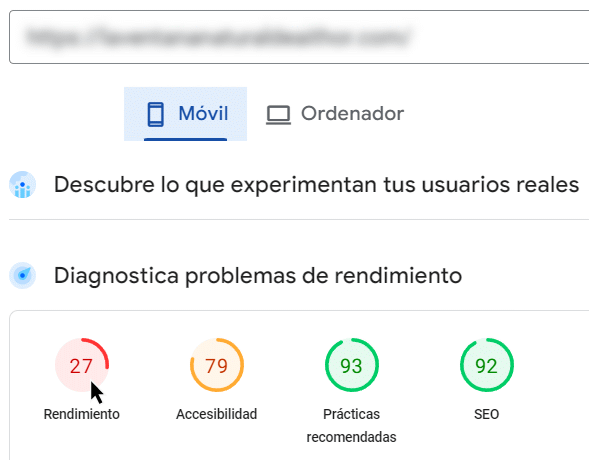
The technical component, the SEO optimization that enables the content-user connection, must strive for excellence. Speed should be the norm, not the exception.
This isn't something that can be hacked by AIO or other generative models, so it can and should be one of the differentiators of your web project compared to competitors.
Core Web Vitals - PageSpeed are part of the future of (technical) SEO. This began at the end of the 20th century as something that most people considered geeky and technical, and it still is… only a few steps ahead.
Challenge for websites and content: beyond the "simple answer"
This new reality presents a significant challenge for websites that have traditionally relied on informational content to attract traffic. Simply having "the right answer" to a common question is no longer enough. To remain relevant and attract traffic, websites must offer added value that LLMs and AI summaries cannot easily replicate.
In fact, and to put it very simply, the future of SEO lies in staying one step ahead of the capabilities of LLMs.
This implies a change in content strategy towards:
- Unique Perspective and Analysis: Offer expert opinions, detailed case studies, original research, or in-depth analyses that go beyond basic information.
- Personal Experience and Narrative: Share stories from people like your team, clients, patients, students—all with proper consent and anonymity. These testimonials or narratives resonate emotionally and provide human context and utility.
- Interactive Tools: Risk calculators, technical and medical (non-diagnostic) self-assessments, or simulations that actively engage the user.
- Community and Support: Platforms or forums where users can interact with each other and with professionals.
- Clear Calls to Action: Guide the user toward a specific step that AI cannot provide, such as scheduling an appointment, enrolling in a course or program, or requesting specific information about services.
- Building Authority and Trust: Being recognized as the ultimate and most trusted source in a niche, which can indirectly influence AI responses and the user's decision to seek confirmation or human interaction.
If your content is purely generic and answers questions that AI can synthesize, your informational traffic will continue to decline. Monetization of this type of content is also affected if there are no visits. Human emotions are the gateway to need, which becomes keywords (search terms) that, in this future of SEO, become conversations.
A new search paradigm, a new future for SEO
Essentially, we are witnessing a shift from an internet based on "clicks and links" to one that, in its informational layers, focuses more on "direct answers and knowledge."
Users, especially in mature markets like the US (the primary testing ground for AI/LLM companies) and growing markets like Latin America (where digital accessibility is key), are rapidly adopting this new way of interacting with information.
For you, the potential client, this isn't just a fluctuation in traffic statistics; it's a sign that the focus must shift from a library of answers to a hub of experience, authority, and action, driving interaction and conversion in a different way.